The Book
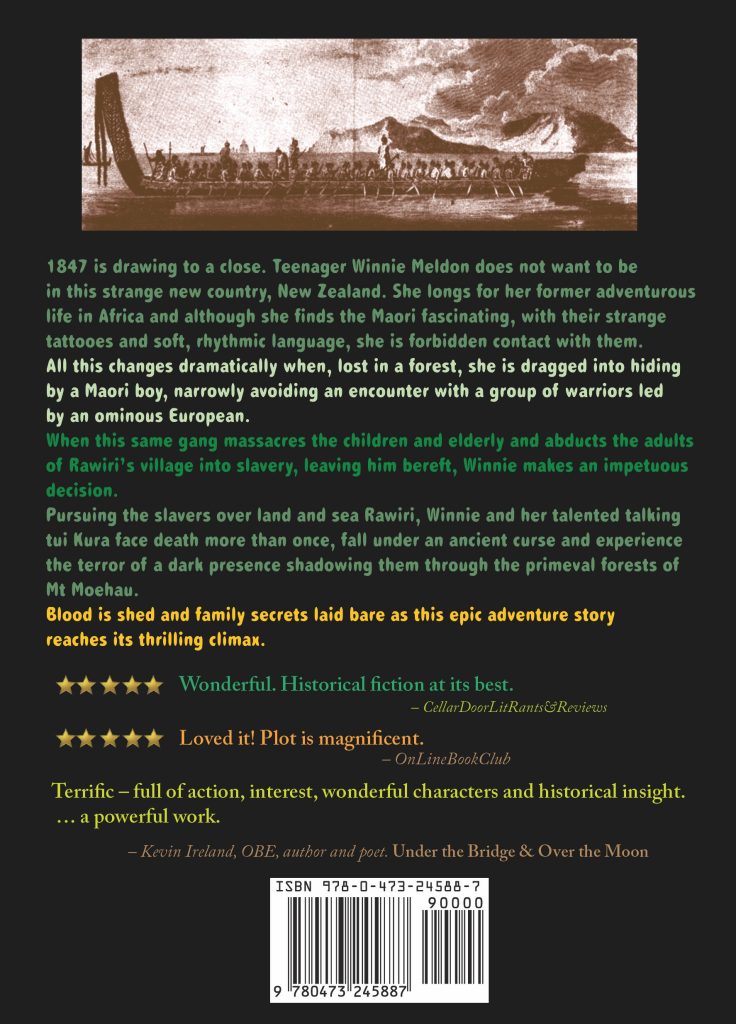
Winnie Meldon is not happy. She has been taken from an idyllic, free-roaming life in Sth Africa to this new colony at the bottom of the world. While sketching a magnificent bird in the forest near her home, she encounters a terrifying group of strange men, but also meets a young Maori boy with whom she is destined for adventures which will change her life. His mother is a slave in a local pah, and when the marauders from the forest abduct the entire village Winnie breaks from her family to help Rawiri get her back. Aided by their intelligent and talkative tui Kura they cross land and sea, narrowly cheating death more than once. Their journey reaches a thrilling climax below Mt Moehau at the tip of the Coromandel Peninsula.
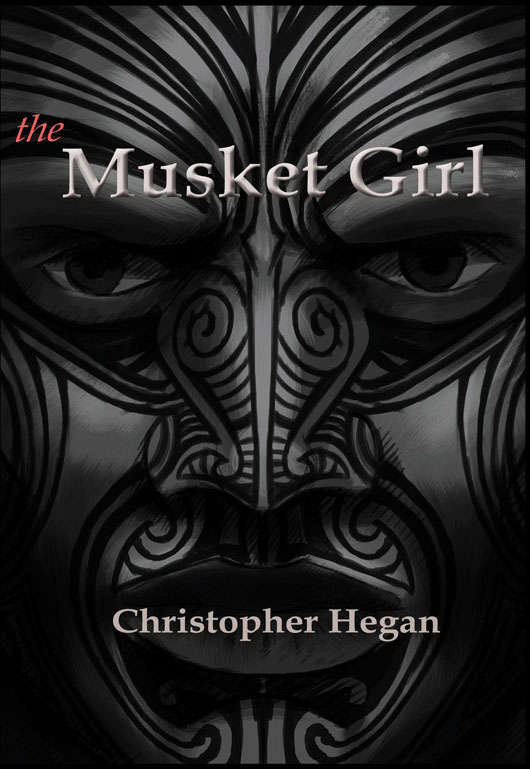
I wrote The Musket Girl to enlighten and entertain my then fourteen-year-old daughter. She read it in two sittings, so I guess I succeeded. But don’t take my word for it:
https://www.goodreads.com/book/show/24955251-the-musket-girl#CommunityReviews
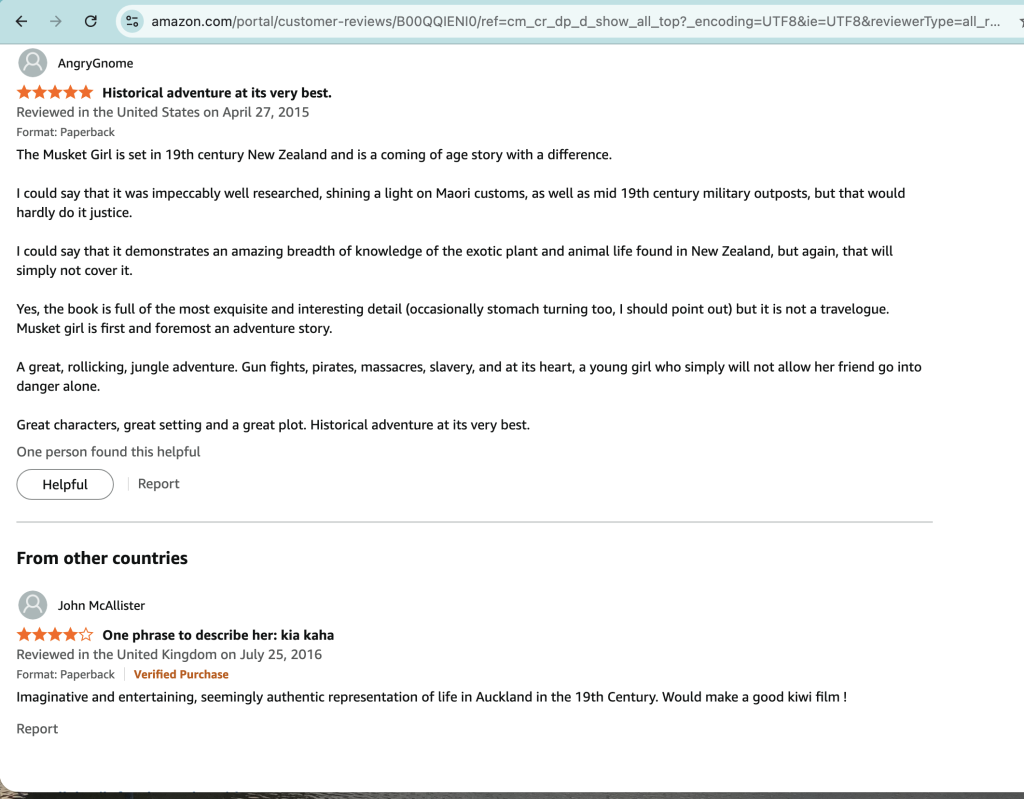
And check out those Amazon reviews below
The History
The period between the signing of the Treaty and the outbreak of the Land Wars in the 1860s was not some kind of colonial hell but a period of peace and progress. The eventual arrival of too many settlers too fast put intolerable pressure on the demand for land in a setting where Maori had cottoned on to the commercial value of their land and were not selling. Tainui, in particular, built an agricultural powerhouse, growing flax and arable crops on an industrial scale and owning not only many waka but sailing ships. This is the country where our heros Winnie and Rawiri pursued and confronted lawbreakers harking for the old ways of rapine and plunder. The Fencible militia of which Winnie’s father is a commander was established early on to provide a defence on Auckland’s southern perimeter to guard against Tainui might. They never fired a shot in anger.
Your kids and grandkids have a right and a need to know their country’s real history. The Musket Girl does not pretend to teach history, but nor is it some misty-eyed fable about colonial oppressors and noble natives. It is set in the real world as it was. I laboured hard and long to ensure not only that every page demanded turning to the next, but also that I could say: All this could have happened. It comes with a glossary of Maori words, a map, and the co-ordinates to follow Winnie and Rawiri’s journey on Google maps.